

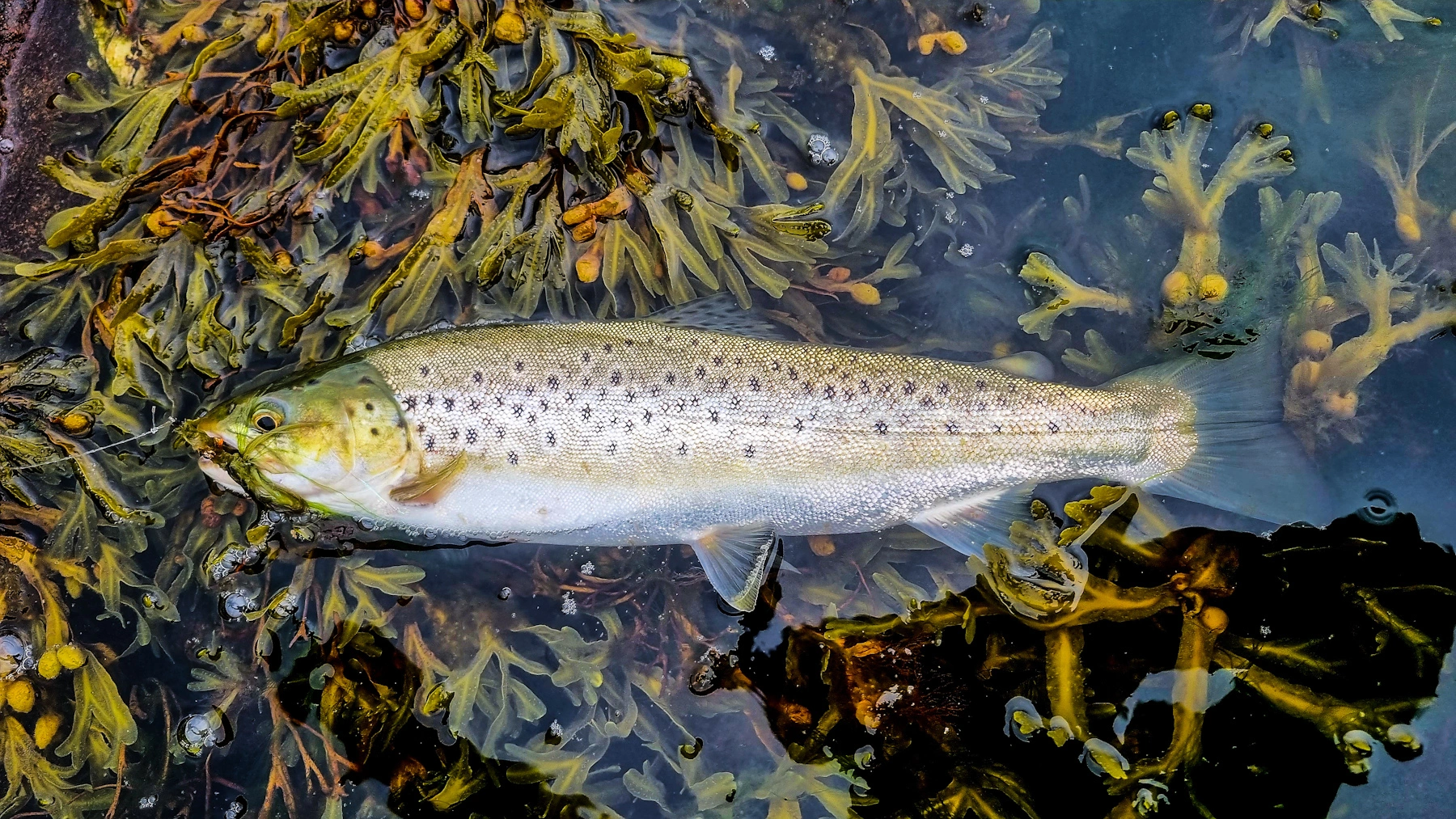
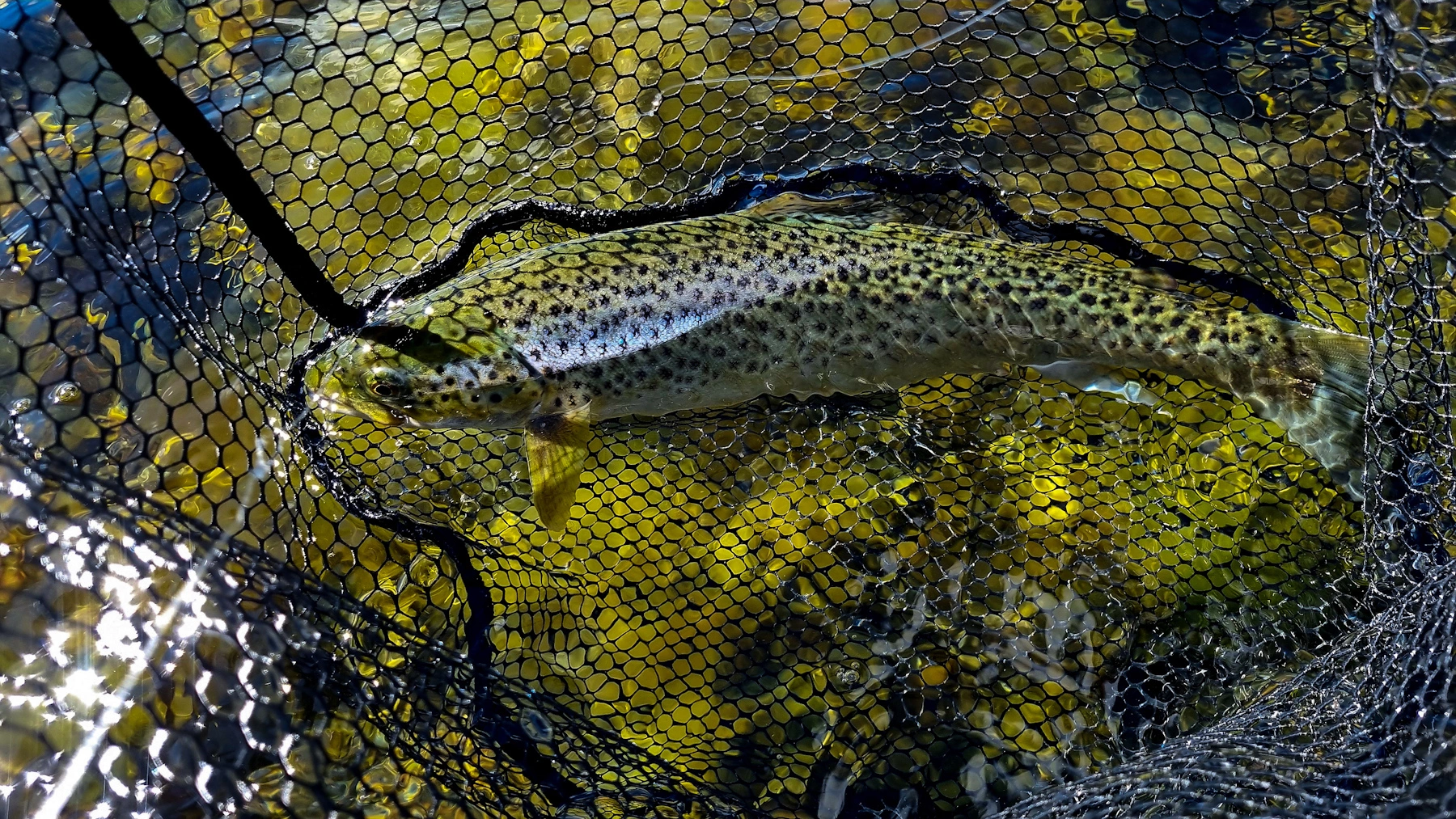
In many places and among many anglers, sea trout have a reputation for being distinctly spring or autumn fish. The water must not get too warm, because in the typical sea trout areas of the Baltic Sea (i.e., usually gently sloping shorelines), passivity increases or the fish disappear into deeper, hard-to-reach areas – at least during the day. Night fishing for sea trout in summer is certainly a major topic, and early mornings or evenings are also said to be successful even in direct proximity to shore.
In my view, these basic principles do not apply to Sweden’s west coast (specifically, in Bohuslän). Summer is an excellent sea trout season. In my opinion, for three reasons:
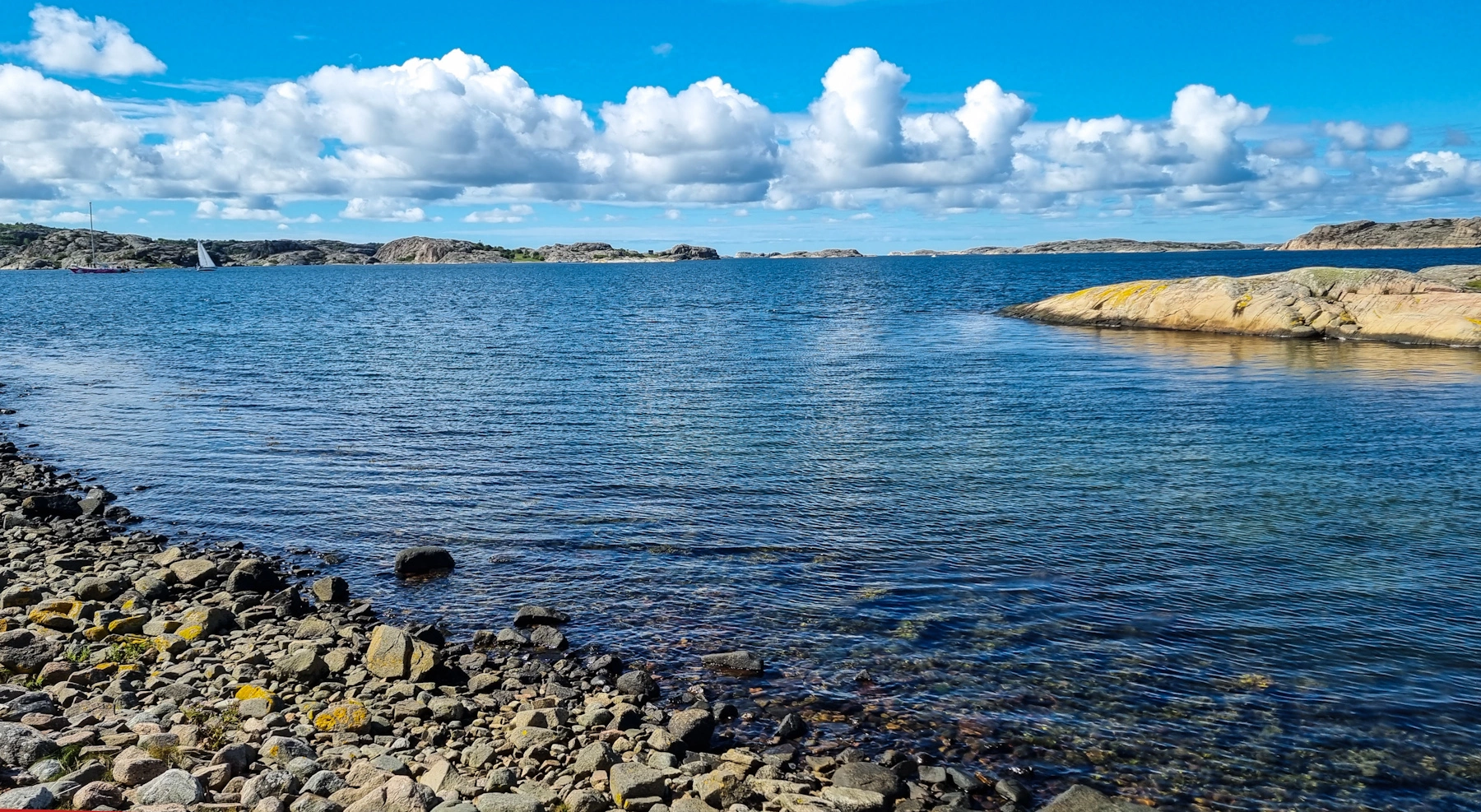
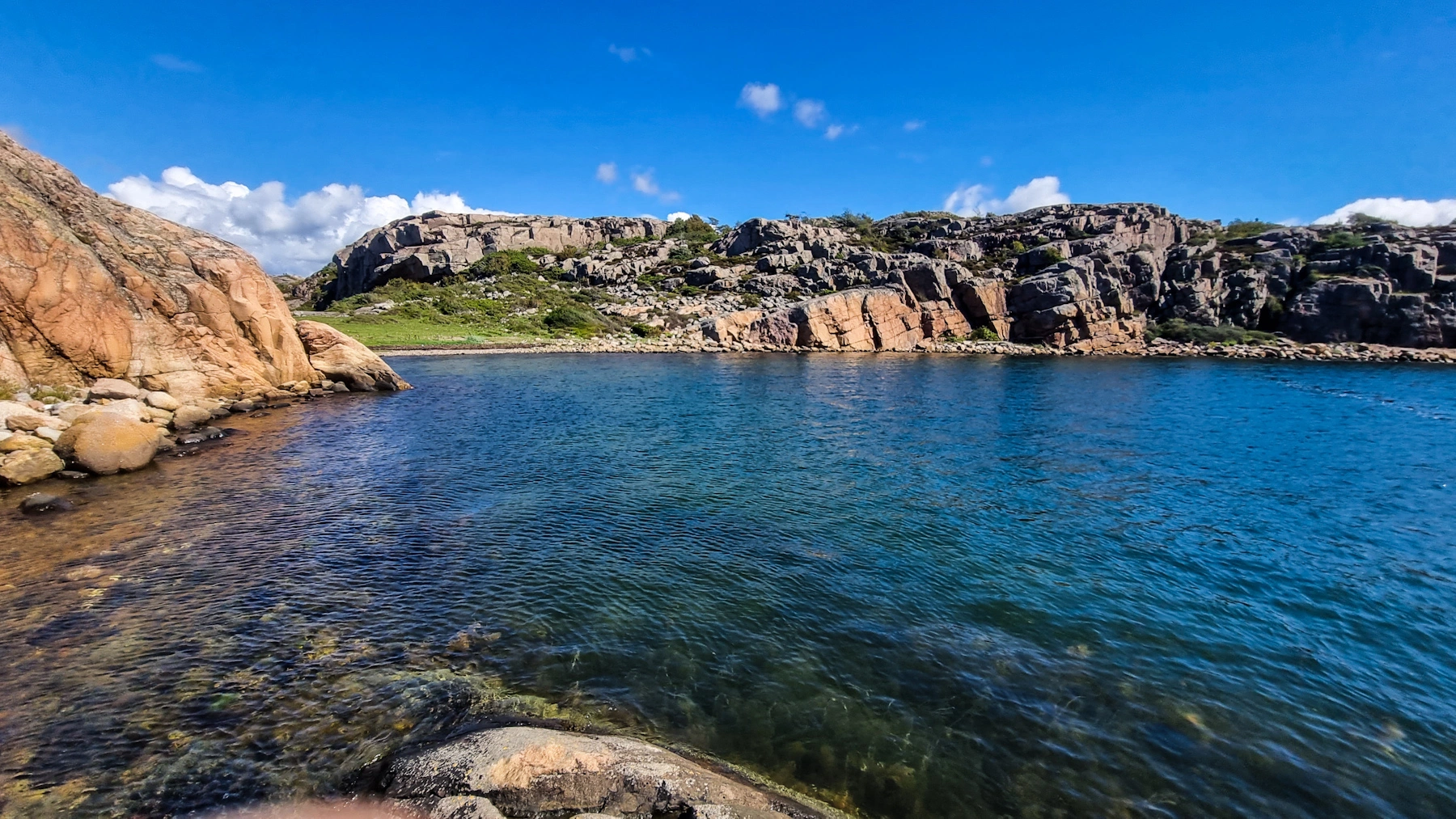
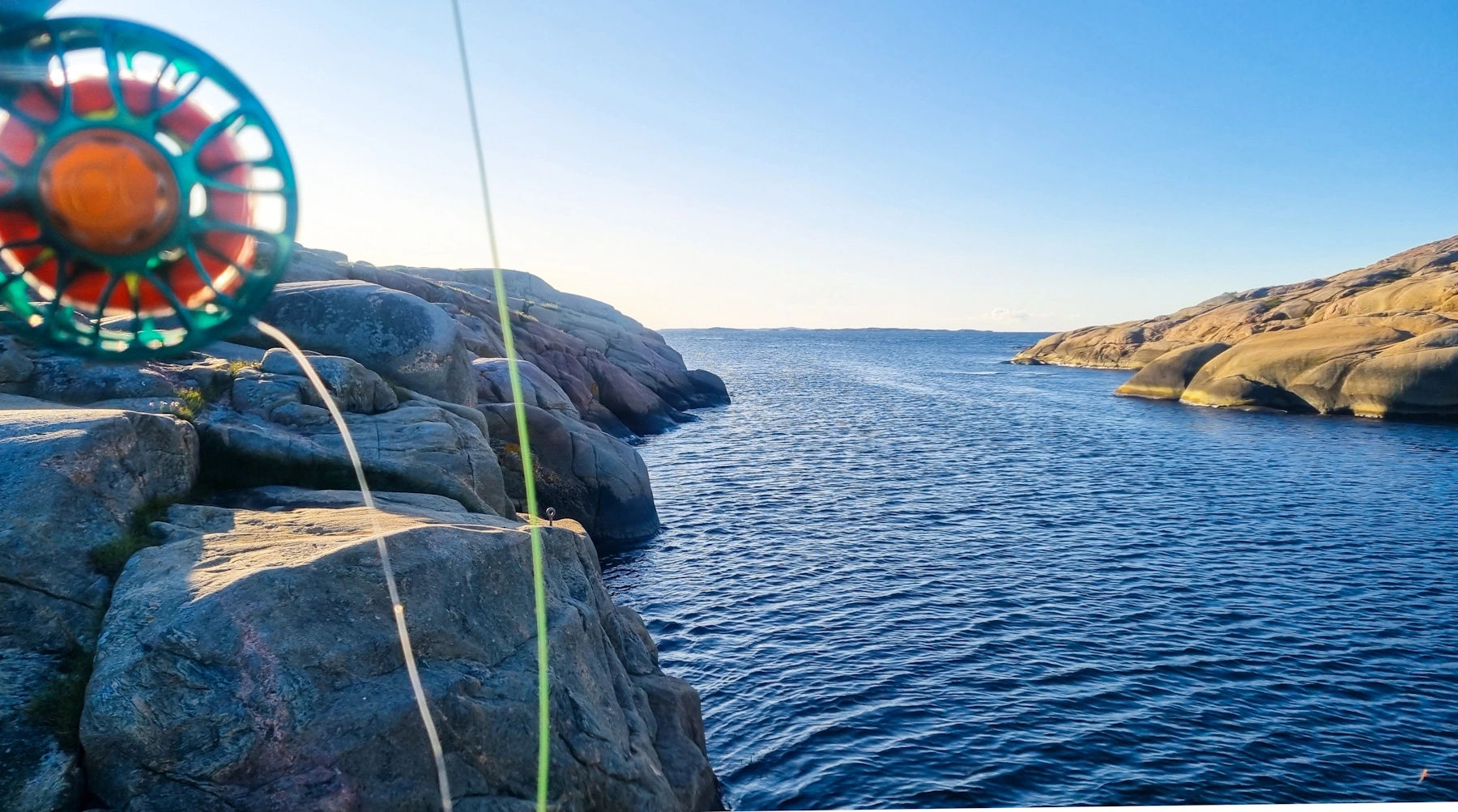
- The distinctive rocky shoreline provides very deep water directly under the rod tip in many places. And these are the spots where the fish retreat when it gets too warm at the typical, rather shallow sea trout locations. Two, three, or four meters below the surface, it is simply much cooler. Unlike in the Baltic Sea, these deep areas are still easily accessible from shore. Step out of the water and go ashore: from the typical sea trout shoreline fished in waders, you switch to land-based fishing from a beautiful rock with deep water in front of you – all within minutes.
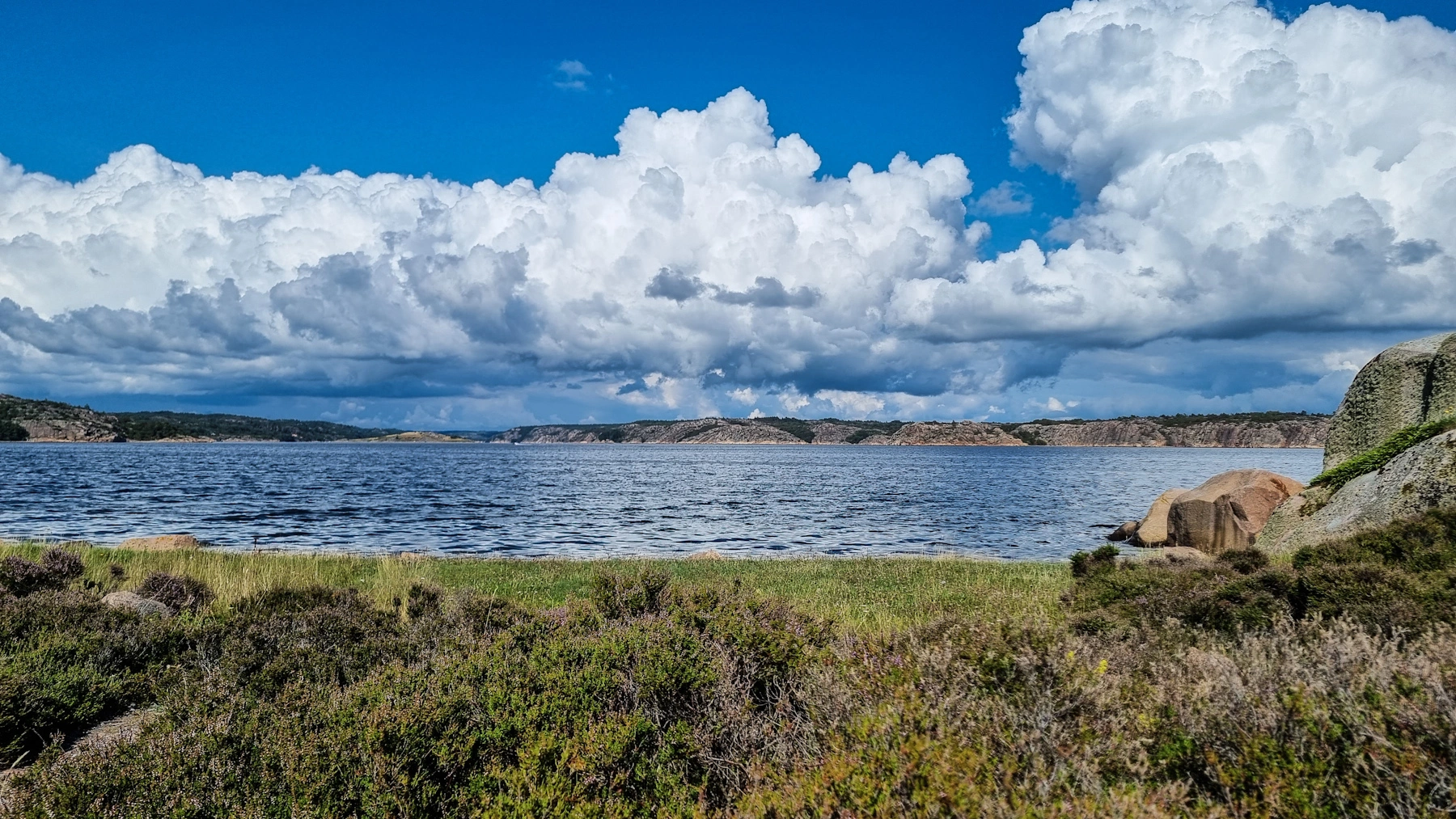
- The Skagerrak provides substantial current and underwater movement, plus tides. The location of this area ensures that the sea is fundamentally much more active than areas within the Baltic Sea. The direct connection to the Atlantic is noticeable both in terms of water currents and wind conditions (which in turn generate currents). Depending on wind and current direction, and also depending on ebb and flow, you can find dozens of spots that are favorable for the current situation. Put simply: currents attract fish and make them active, especially at higher water temperatures. And because there are many such spots, you can almost always identify places where fish are present.
- Water temperatures along the coast of Bohuslän tend to be lower than in the Baltic Sea (according to ChatGPT 15-18°C, compared to Eckernförde in the Baltic Sea: 18-20°C). And because sea trout, like all trout species, prefer temperatures well below 18°C, it seems logical that sea trout here in the north maintain higher activity levels over a longer period even in summer.
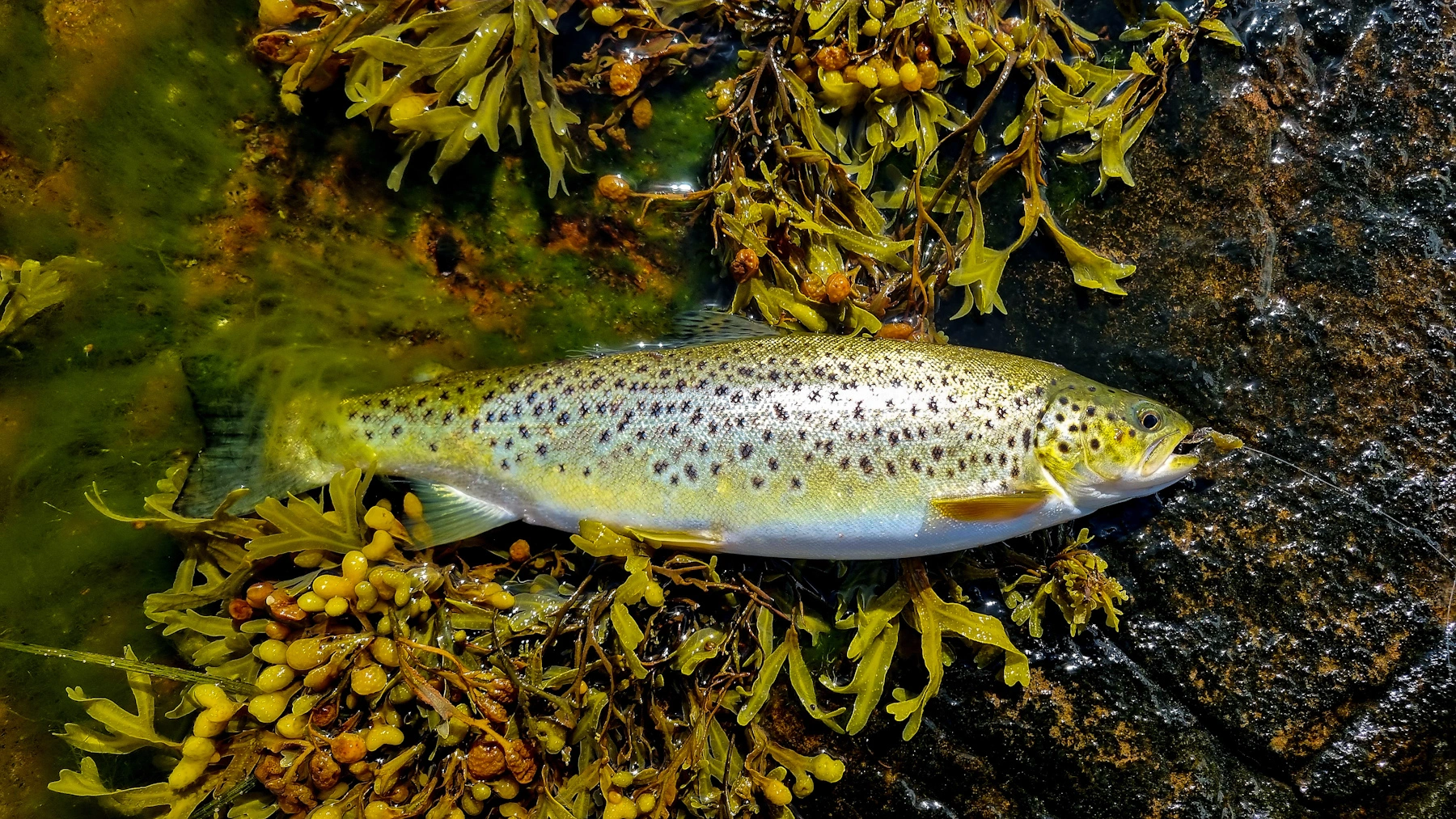
So how do you proceed?
Higher water temperatures require faster retrieve speeds (before it gets too warm and activity noticeably decreases again).
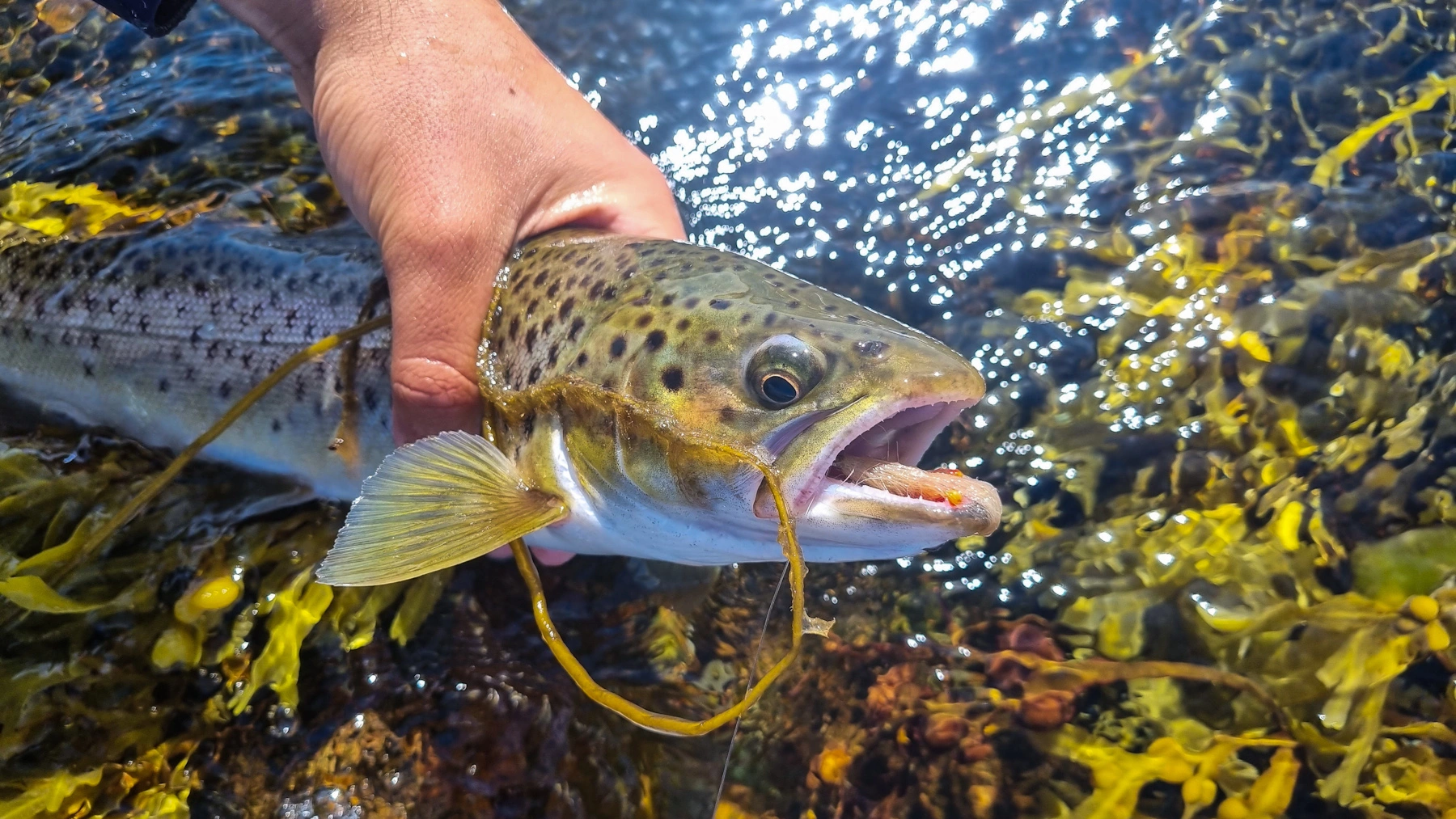
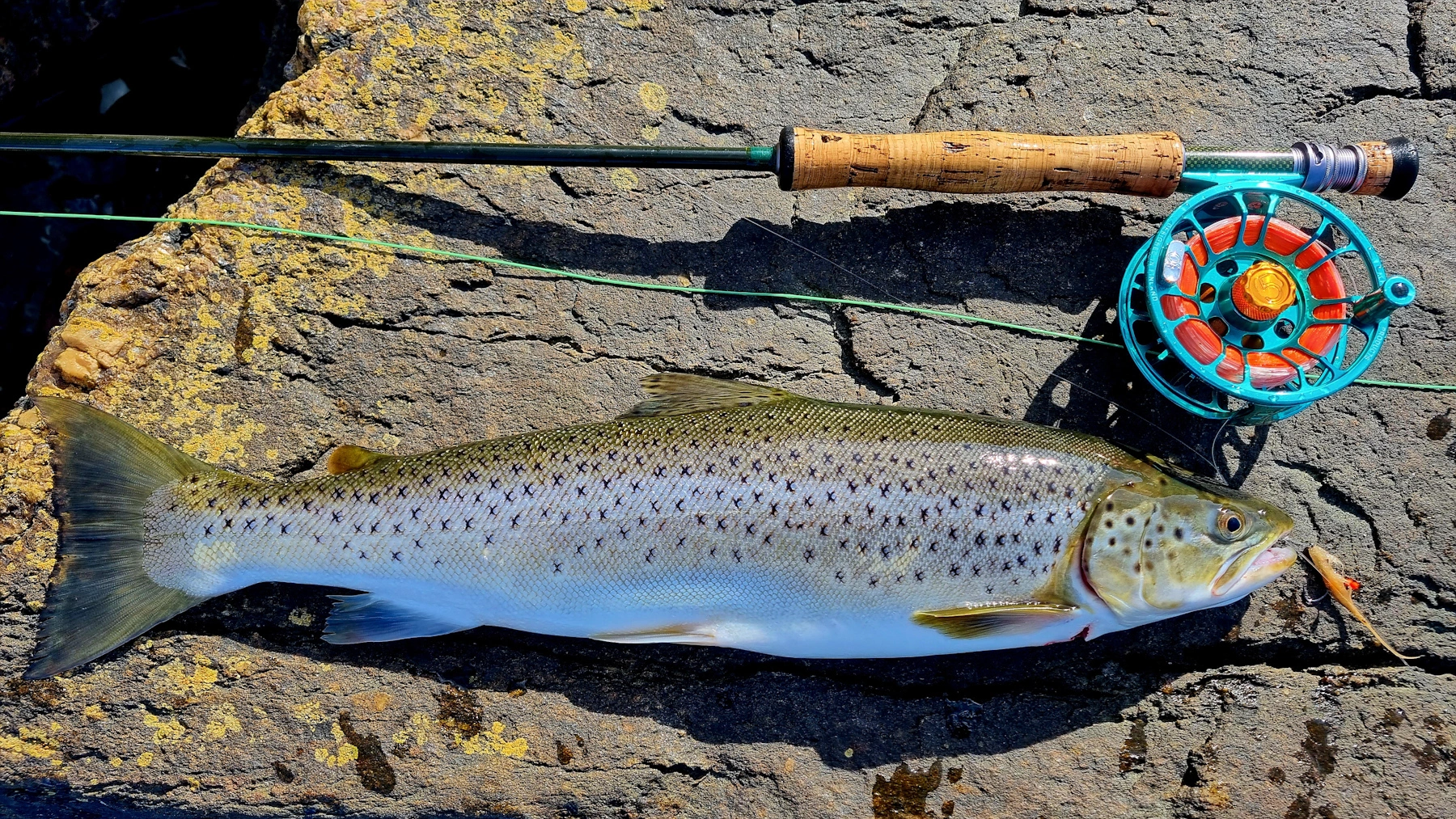
Inspired by Bernd Ziesche and some of his publications, I had a real revelation some time ago: after fishing the first half of the day classically with an intermediate line over medium-depth water (1-3 meters), I switched in the afternoon to a very fast sinking line (Sink 7). In combination with a speed fly (Samsö Killer, by Bernd Ziesche) and a speed retrieve method (Bernd Ziesche…), I got immediate reactions. This technique can certainly be described as physically demanding over time and you can hardly keep it up for hours, but the results were impressive – on subsequent trips as well.
After the fly surfaces, let it sink for a few more seconds and then go full speed – strip as fast as you can!
Brief guide for this somewhat extreme fishing method:
Gear (fly fishing):
- Rod: Class 7 or 8
- Fast sinking line (Sink 7 – Sink 10)
- 1.5 meter 0.33 mm leader (speed provokes violence…)
- Elongated flies, like the mentioned Samsö Killer. Toby patterns also work well.
Where:
Medium to steep (rocky) coastline. I mean spots that have at least 2.5 meters depth just a few meters from shore. There is no upper limit, and you catch trout without problems over several meters of water depth.
And then depending on current and wind: basically, it seems positive to have as much of both as possible. However, the speed-strip method described above also brought success in absolutely calm conditions with still water.
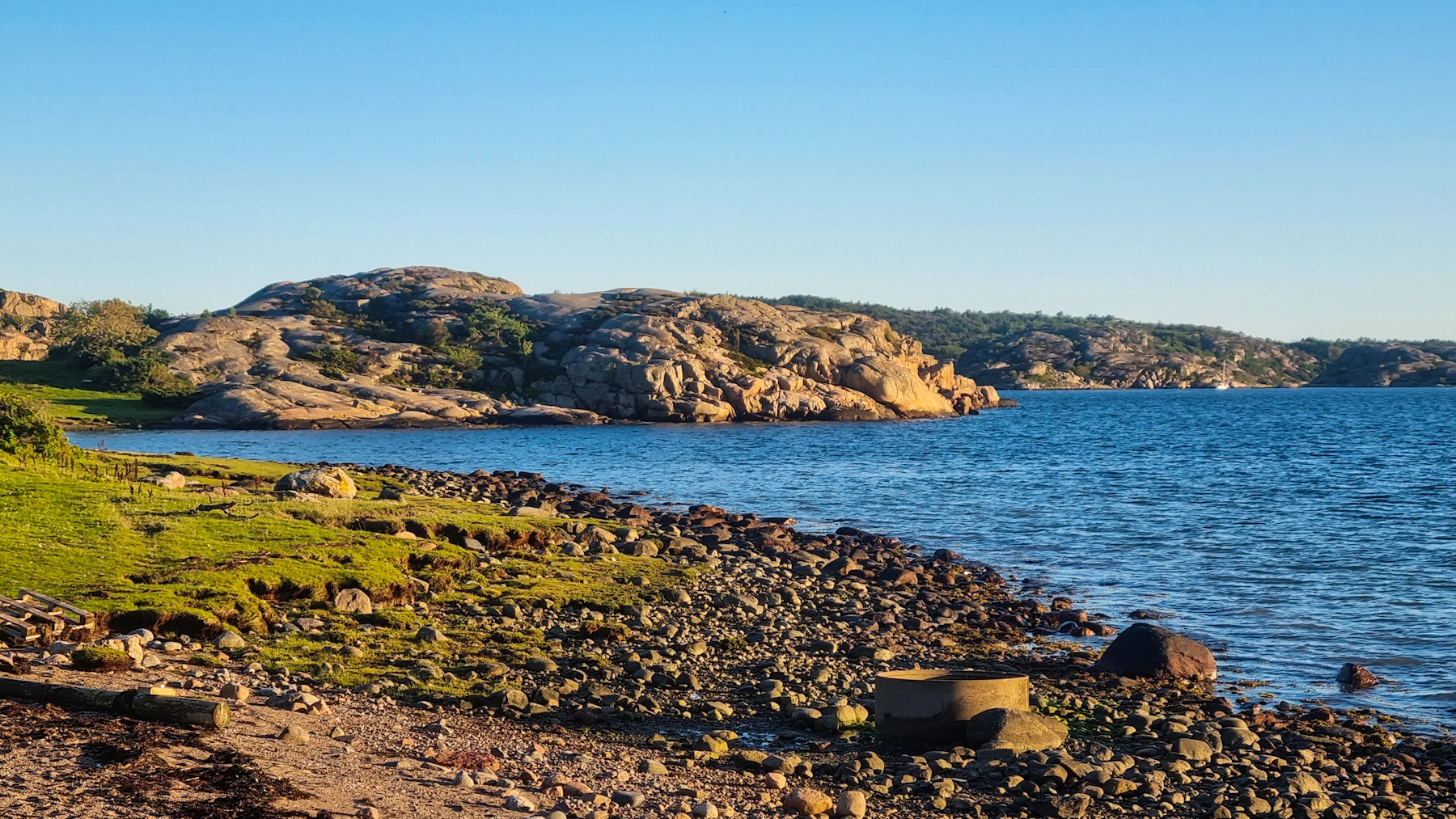
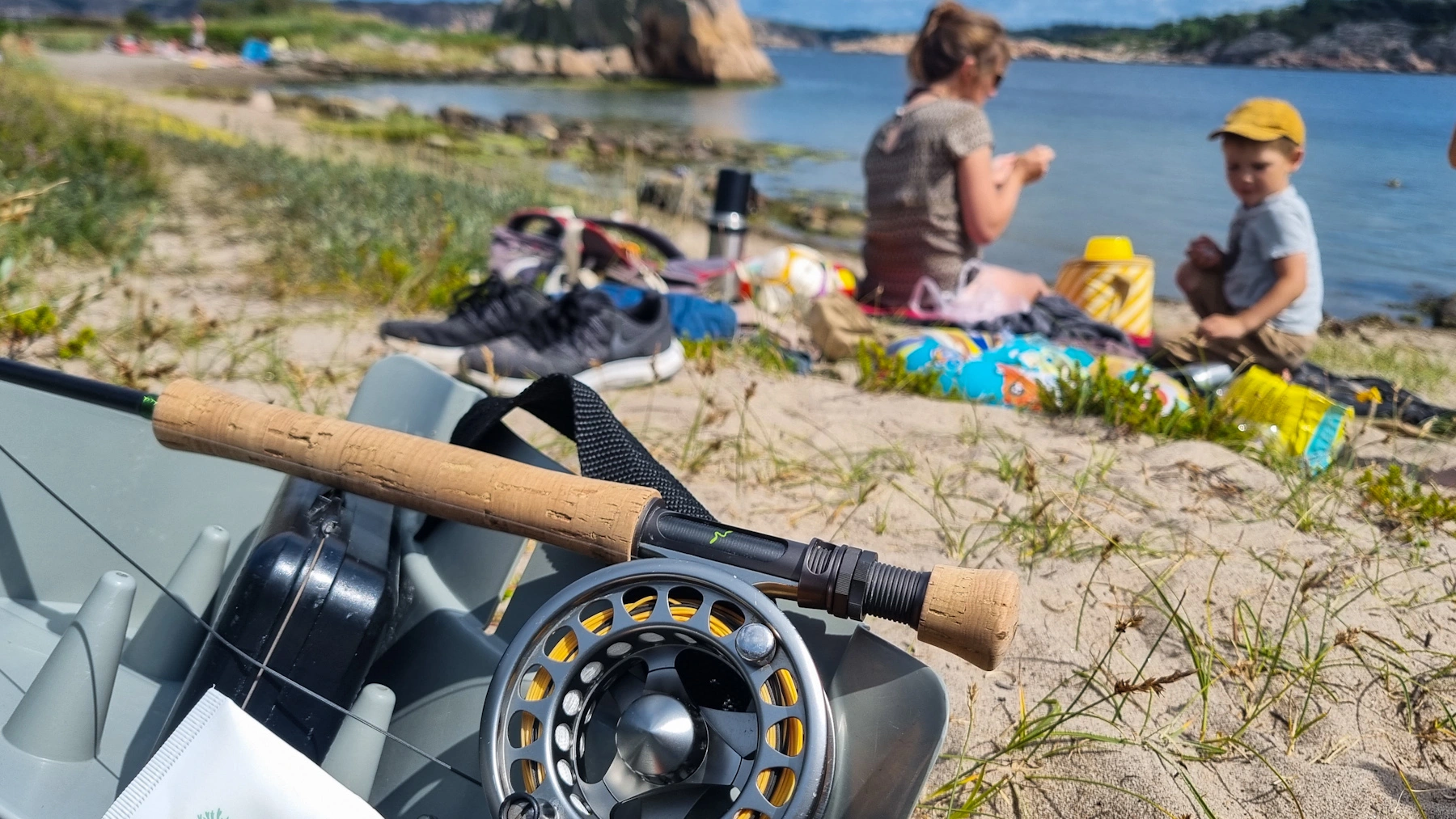
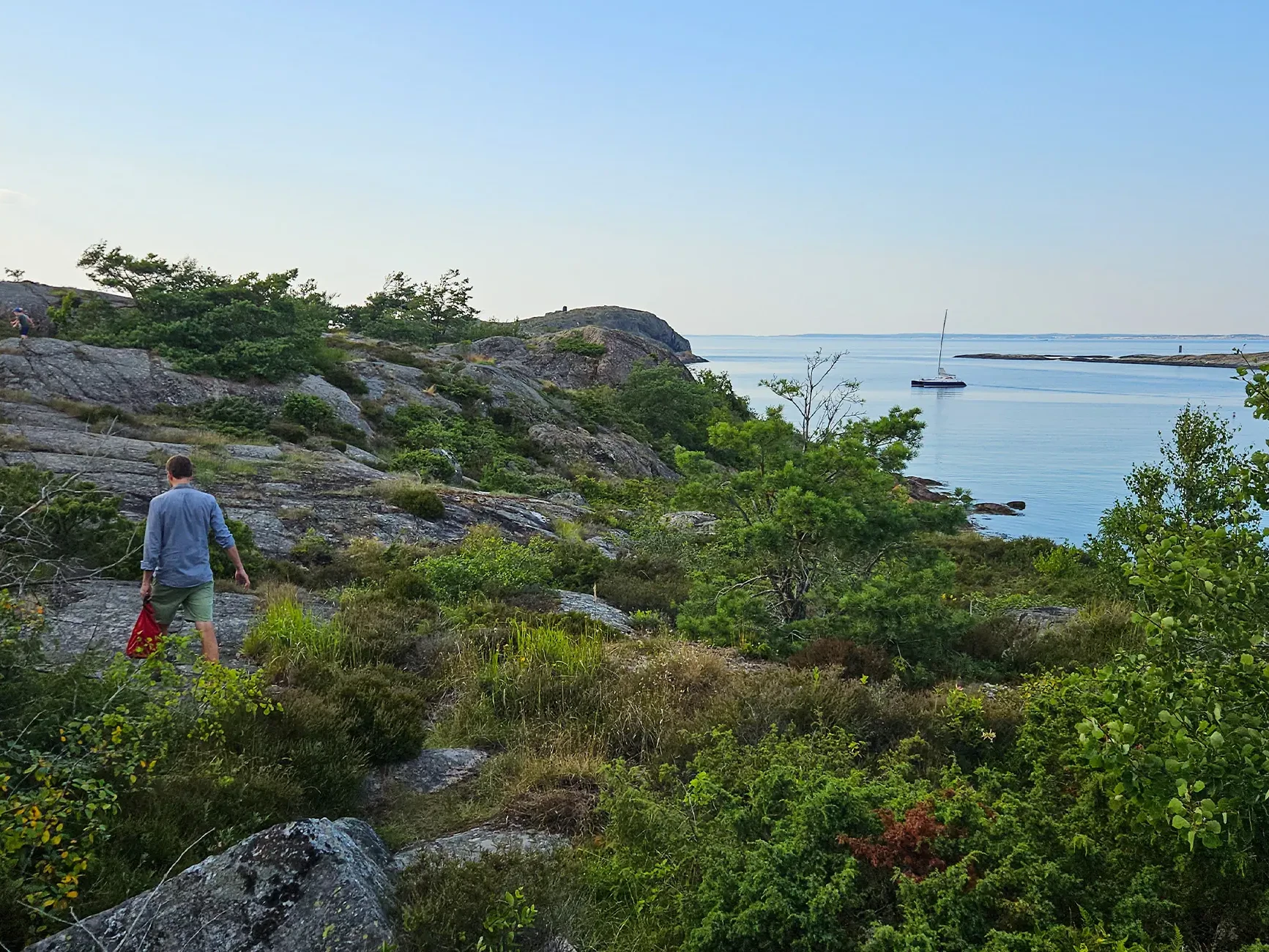
The spots are often incredibly beautiful and you would expect them somewhere in the Mediterranean rather than in the far north of Europe. Small sandy bays, framed on the sides by rocks, several meters of visibility, the open sea ahead, are more reminiscent of bathing coves on the Côte d’Azur than sea trout spots.
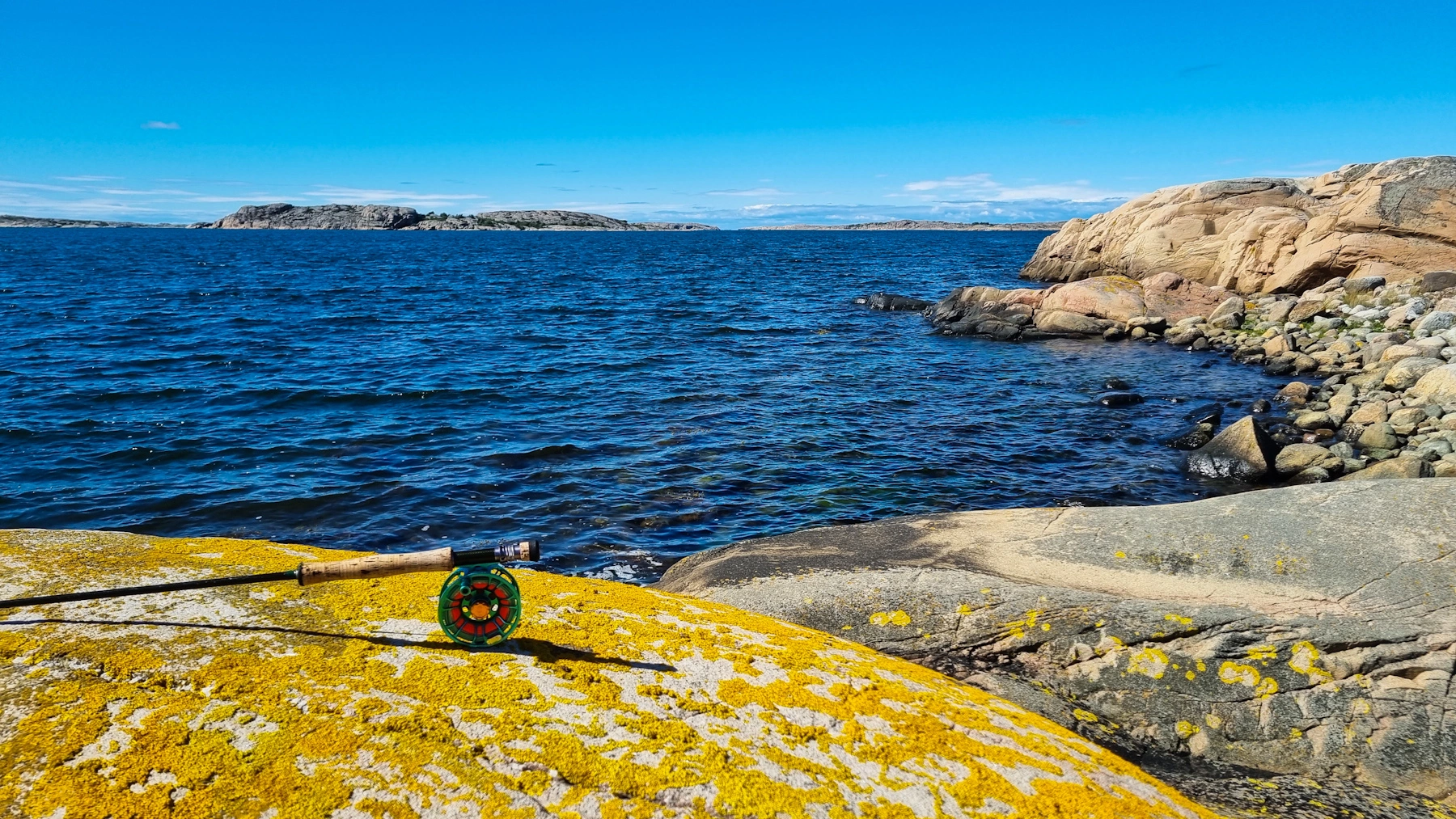
When:
My experience with this described rock fishing is limited to daylight hours (sunny and cloudy). In the evenings, mornings, and at night, more classic methods are more promising.
How:
Both (at appropriate depth) in direct proximity to shore, e.g., cast parallel along sloping rocky shores, but also cast straight out into open water.
The fishing method described above works very well, but is certainly not the only method that brings fish in summer. You also have success with more classic and much more relaxed approaches – both in terms of spot selection and gear and technique choices.
Sinking lines, such as Sink 2 to 4, I consider (during the day) almost always sensible. You don’t fish the very shallow spring spots anyway, and a brisk retrieve, which these lines require, is usually not wrong in summer.
If you don’t want to fish over the very deep spots – and by that I mean 2.5 to 6, 7, 8 or more meters – as described above, it’s best to look for areas that I assign to the following categories:
1. Reef-like structures
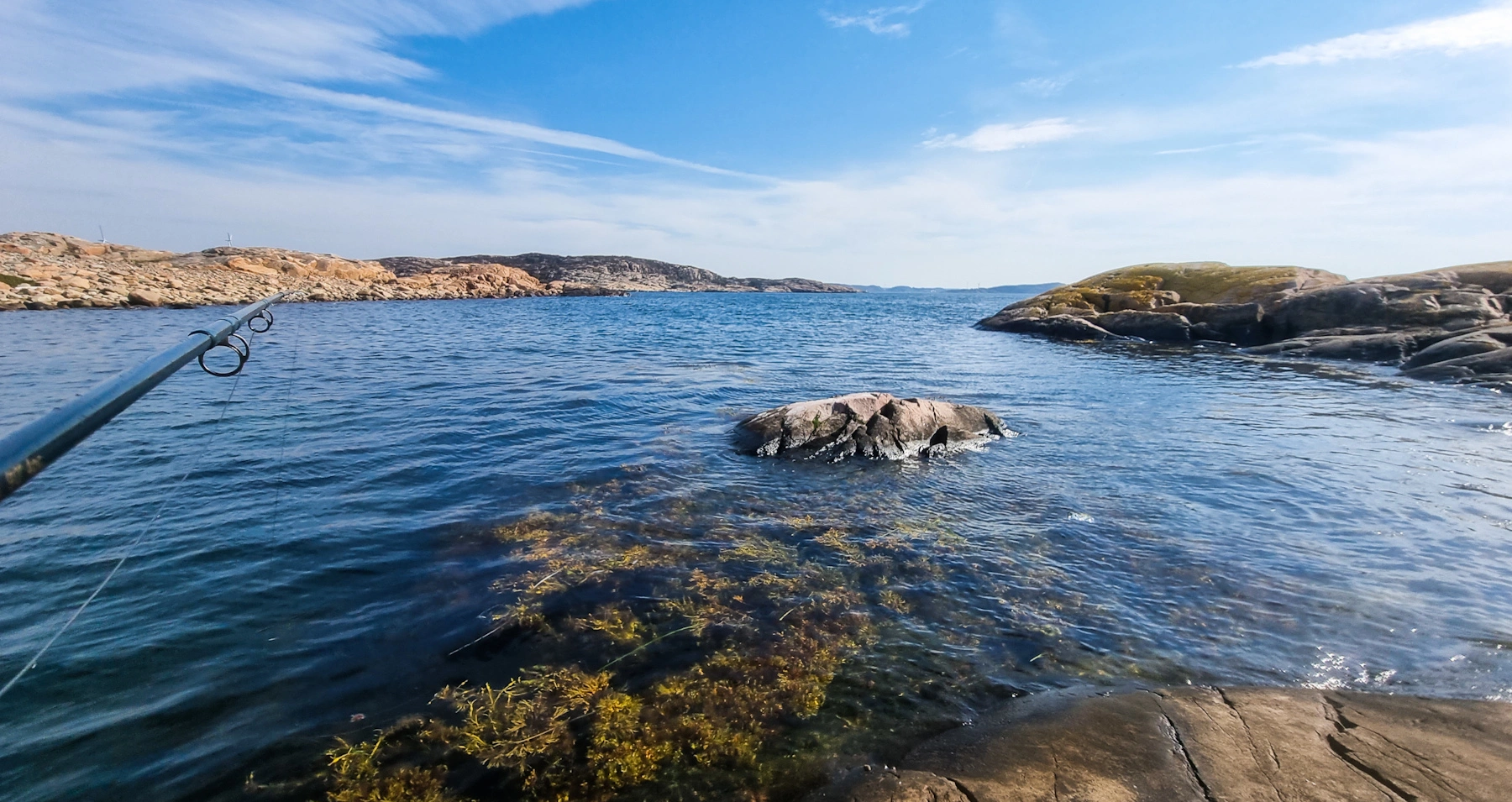
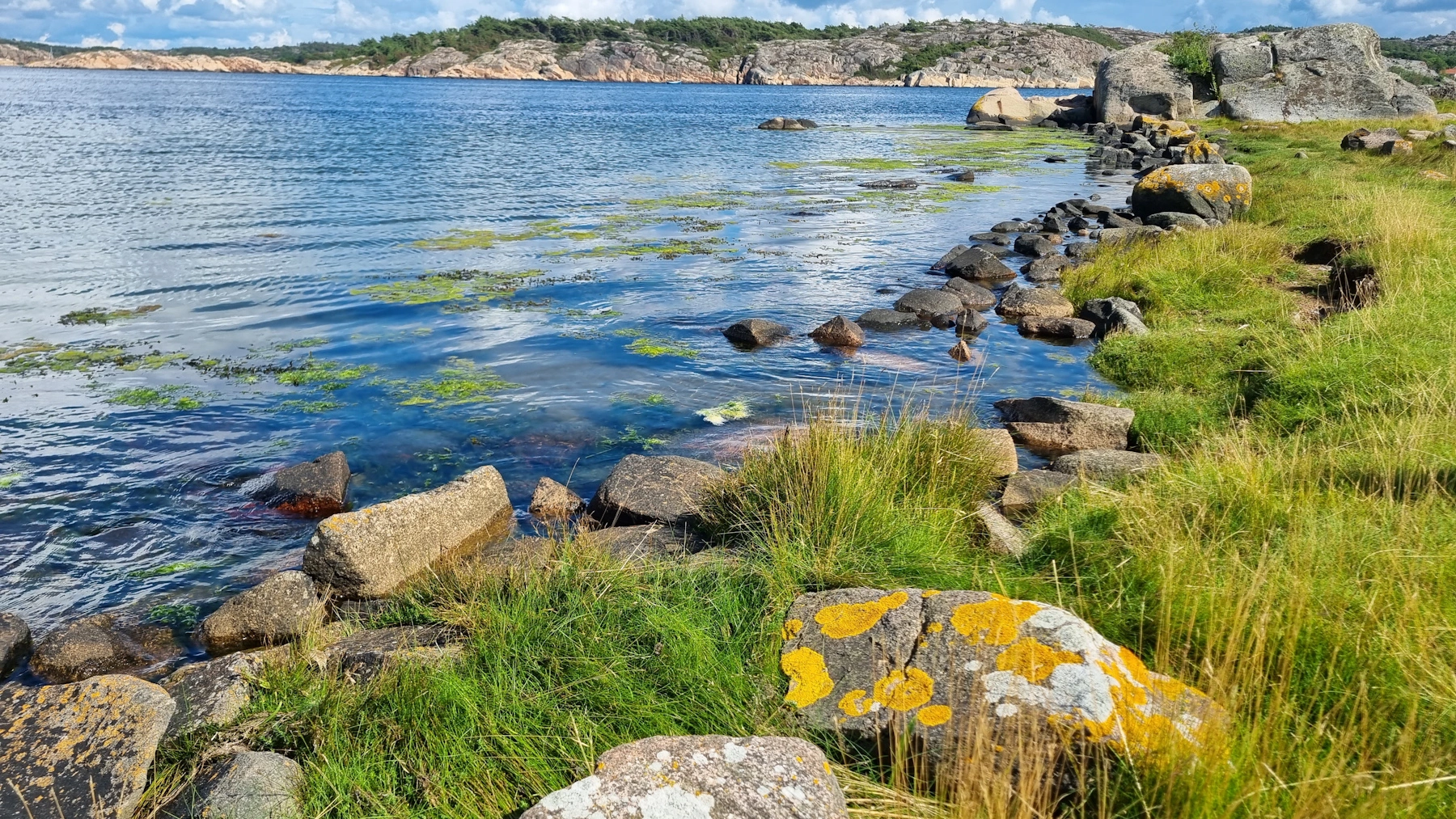
By reef-like structures, I mean spots in front of plateau-like rock formations on land that then continue underwater at moderate depth. Lots of rocky structure and aquatic plants characterize these spots. Often you can still fish these spots directly from land.
2. “Boulder shores”
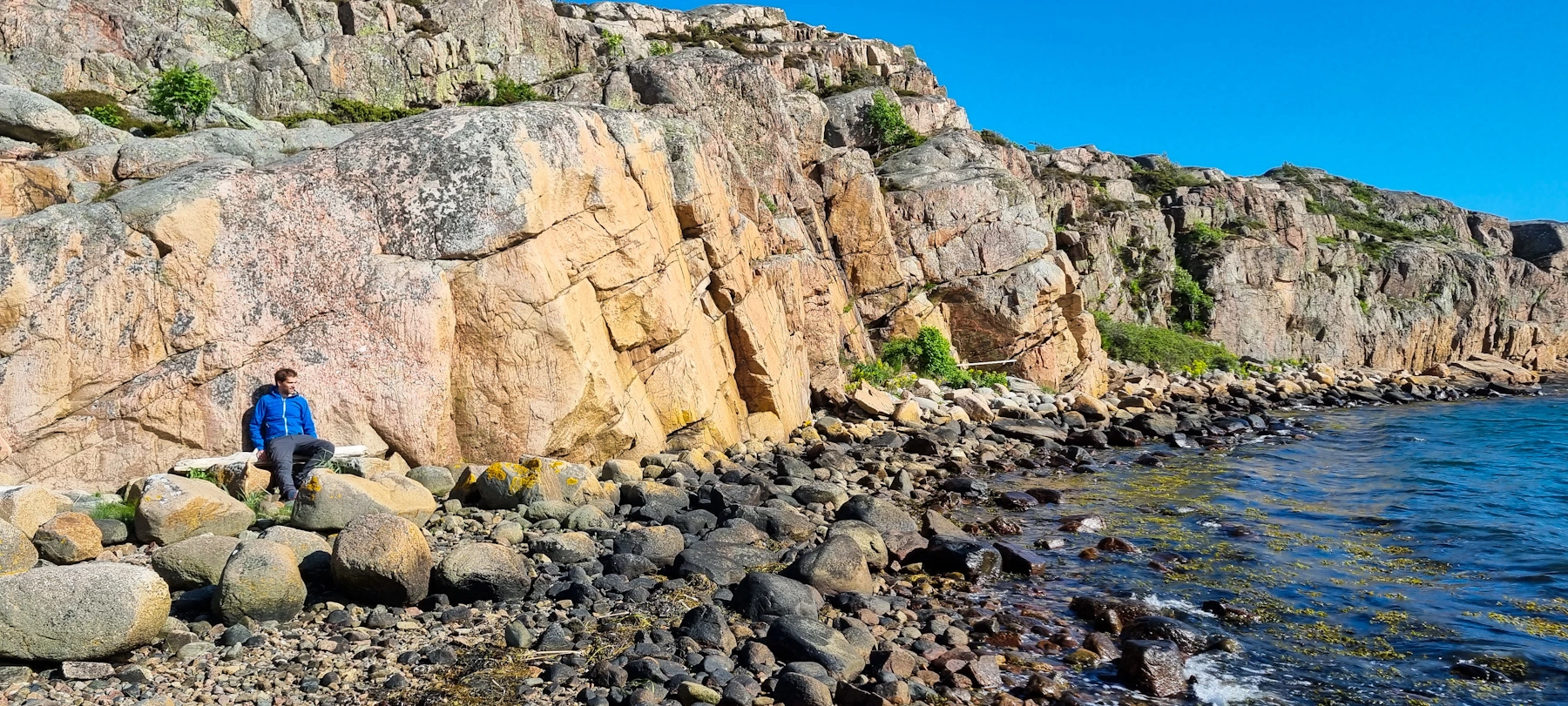
Boulder shores are basically beaches that don’t consist of sand, but of large stones. Fishing at these spots can be very laborious at times, because you wade on very rough ground – slippery, overgrown, round, large stones. Often these spots descend quite quickly but evenly into depth. You catch fish both casting parallel to shore and at full (fly fishing) casting distance.
3. Outer areas of small bays
Where small inlets, sometimes with sandy beaches, get deeper toward the bay exit, it can be very good. Here there are sometimes interesting current conditions and fishing at these “Mediterranean spots” is wonderful.
The same principles can be applied for spin fishers and lure anglers. And often it is even much easier to fish for sea trout with this method. Rock walls behind you, unfavorable wind directions, etc., simply hardly matter. Medium-weight spinning rod, slim (somewhat heavy coastal spoons) and off you go!
A safety-relevant note at this point: Sometimes you stand several meters above the water, the rock wall in front of your feet dropping steeply (this is also why fast sinking lines are important, so you don’t just fish in the surface film). If you fall into the water here, it can be problematic to get back out. Take great care, especially if you are wearing waders.
Read more great articles
Wilderness Paddling in Western Sweden – Canoe Discovery Tour in Dalsland
Introducing: Södra and Mellersta Kornsjön – the perfect area to relax for a few days in an undisturbed waterscape, without having to travel far within Sweden!
Pike Fishing in Sweden – How to Catch One Almost Guaranteed as a Beginner. The Complete Guide.
Pike are as much a part of Sweden as Pippi Longstocking or Pettson and Findus. This applies not only to the tens of thousands of passionate hobby anglers—many of whom travel from Germany each year to…
Our rental fleet is complete – Spring Canoe Test Days
Just a few weeks ago, the maiden fleet of our little "Granite & Green" paddling lineup became complete: two single sea kayaks and one 3-person canoe are now safely stored in our garage, just waiting…
35 excursion destinations around Munkedal and in Bohuslän
Over the years, we've had the chance to get to know quite a few excursion destinations here in the area. Some are just a few minutes away from our Treeline Studio, while others require a slightly…
Coast meets forest
Bohuslän and Dalsland are both Swedish regions that aren't necessarily considered heavyweights among Swedish landscapes in terms of international fame. People know Småland (because of Astrid…